

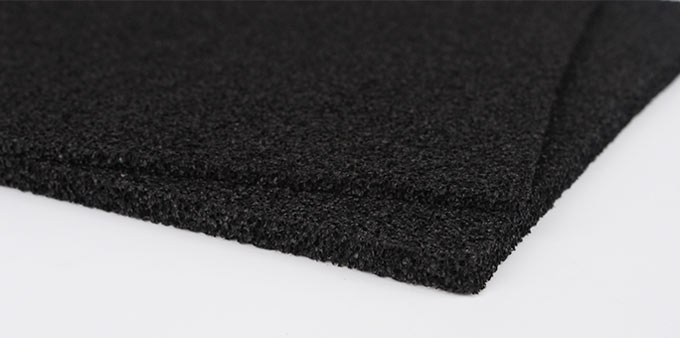
If you belong to the packaging industry, you must know the importance of foam. Different types of foams are used for packaging. One way in which the different form types can be divided is the open-cell foam versus the closed-cell foam format. These two foam materials differ in their properties and can be customized to suit various purposes. However, you must know which foam type offers what type of advantage so that you can make a wise decision.
Open-cell foam
Open one of the primary examples of open-cell foam is polyurethane foam or PU foam. This type of foam is most often used for its shock absorption, sound absorption, and insulation properties. It is used in many industries to build and package materials like seat cushions, furniture upholstery, electronics for material packaging, power equipment, etc. If you are looking to purchase polyurethane foam, check out PU foam Malaysia.
Open-cell foams like polyurethane foams are much superior to other insulation forms due to their oxygen resistance and dexterity. The open-cell foams are primarily made of polyurethane, PVC, EPDM rubber, nitrile, etc.
Advantages of open-cell foam types
Some of the benefits of opting for open-cell foams are
- It does not contain volatile compounds or any ozone-depleting gas.
- It minimizes the transmission of noise.
- It does not produce any residual particles and helps in trapping foreign particles in the base of the pore. Therefore, it is ideal for reducing allergies and tasks.
- It is resistant to the growth of mold.
- It is perfect for food soundproofing needs.
- It has a great insulation capacity of around R- 4.21 per inch.
- It can lead to 40 to 50% of heat loss or gain in apartments.
- It is highly durable and will not diminish with the passage of time.
- High expansion capacity
- Low density
Application of open-cell foam types:
- Soundproofing
- Furniture upholstering
- Packaging
- Interior design projects
Closed-cell foam
Closed-cell foam is flexible, strong plastic-type rubber material that contains internal cells or pores. These internal poles are packed closely together, but they are not connected. Closed-cell foams are more often used in industries like electronics, cars, packaging, construction, automotive, etcetera. These foam types mostly include materials like polyethylene foam, EVA foam, nitrile foam rubber, neoprene foam, SBR foam rubber, etcetera. Check out PE foam Malaysia for all your PE foam needs.
Advantages and features of closed-cell foam type
- Extremely reliable and helpful for use in interior and exterior environments.
- Enhances the structural strength
- Perfect for providing sound and heat insulation
- Causes reduction in vapor transmission.
- Provides enhanced moisture barrier.
- Provides amazing leakage resistance.
Application off closed-cell foam types
- Shock absorption
- Thermal insulation
- HVAC system
- Sealing and insulation of buildings
- Medical disposables
- Ceilings of cabinets and enclosures
- Aircraft and aerospace etc.
The open and closed cell foam types have certain common features like thermal insulation, shock absorption, noise reduction, et cetera. However, the closed-cell contains distinguishes the two foam types based on their thermal conductivity, water absorption committee your strength, water tightness, compressive strength, and vapor permeability.
